Fruitpulper.com / Equipment / finishing configuration
Finish fruit pulp with the right screen and second-stage duty
In the pictured DJ two-stage family, the second cylindrical chamber receives the first-stage screened stream. Its rotor and screen shape the final pulp while a separate reject carries coarse material away. This is a configuration within the photographed machine family; a standalone finisher should be specified separately, not inferred from this image.
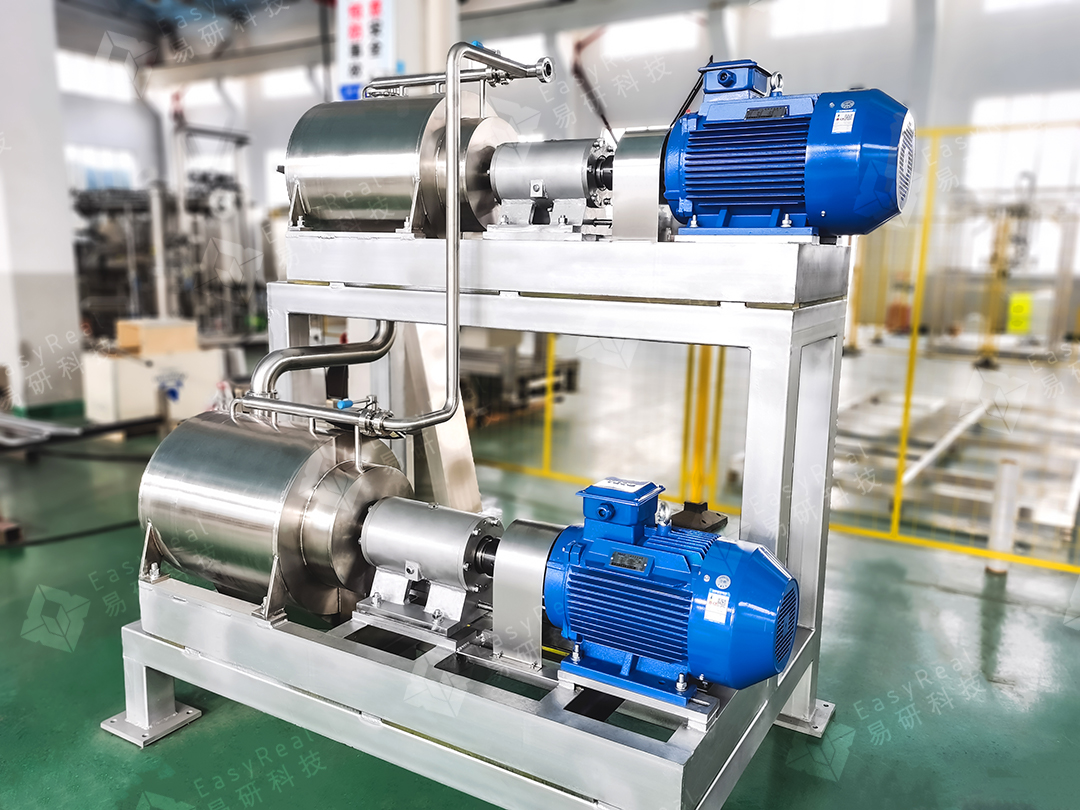
What the second chamber does
Its feed is already partially separated, not whole fruit. The screen retains material that does not pass; the product outlet carries the accepted pulp. Compare final texture, seed fragments, reject loss and screen loading during a representative trial.
Screen aperture is only one variable
The published DJ family lists a 0.4–1.5 mm screen-aperture range. Perforation shape, rotor action, clearance, fruit preparation and feed rate also affect the actual product. A nominal aperture alone is not a guaranteed maximum particle size.
Clean and maintain both stages
Plan safe isolation, screen removal, chamber inspection, seals and reject-discharge access for both stages. A cleaning connection does not establish full automatic CIP coverage; verify the delivered cleaning arrangement in the acceptance plan.
| Decision point | Paddle mechanism trial | Screw mechanism trial |
|---|---|---|
| Contact and conveyance | Record paddle geometry, speed and screen clearance for the tested feed. | Record screw geometry, conveying action and discharge restriction for the tested feed. |
| Feed boundary | State whether paddles receive prepared fruit or a pumpable stream, including solids load and temperature. | State whether the screw receives prepared fruit or a pumpable stream, including solids load and temperature. |
| Controlled adjustment | Change only agreed variables such as speed, clearance or outlet restriction while feed and screen stay constant. | Change only agreed variables such as speed or discharge back-pressure while feed and screen stay constant. |
| Acceptance evidence | Record stable-run settings, screen condition, accepted product and reject samples and weights. | Record stable-run settings, screen condition, accepted product and reject samples and weights. |
Questions before a trial
Are pulper and finisher always separate machines?
No. Suppliers use the terms differently, and a single machine may be configured for either duty. Describe the process function instead of relying on the label.
Which mechanism gives higher yield?
No universal answer is defensible. Yield depends on material, preparation, screen, adjustments and the agreed definition of usable product.
What should a comparison trial hold constant?
Use the same prepared feed lot, run duration, sampling points and analysis method; document adjustments and weigh both product and reject streams.
Technical references and scope
These sources explain general mechanisms and methods. Another supplier's model, rating or claimed results are not specifications for fruitpulper.com.
Equipment quotation
Tell us what the machine will process.
Send the fruit, prepared-feed rate and target pulp or puree. Include a drawing or trial record when available; you can enquire without a screen size.