Fruitpulper.com / Mechanism
Understand how an industrial fruit pulper moves feed across a screen and separates two outlets.
Inside a typical pulper or finisher, prepared product moves through a cylindrical screen chamber. Mechanical action presents material to the screen; the accepted fraction passes through and retained solids travel to a separate discharge.
Prepared feed
Define fruit, temperature and upstream preparation.
Rotor action + screen surface
Functional illustration; not a machine drawingThrough-screen product
Test texture and defects against the product brief.
Retained solids
Inspect integrity and useful pulp remaining.
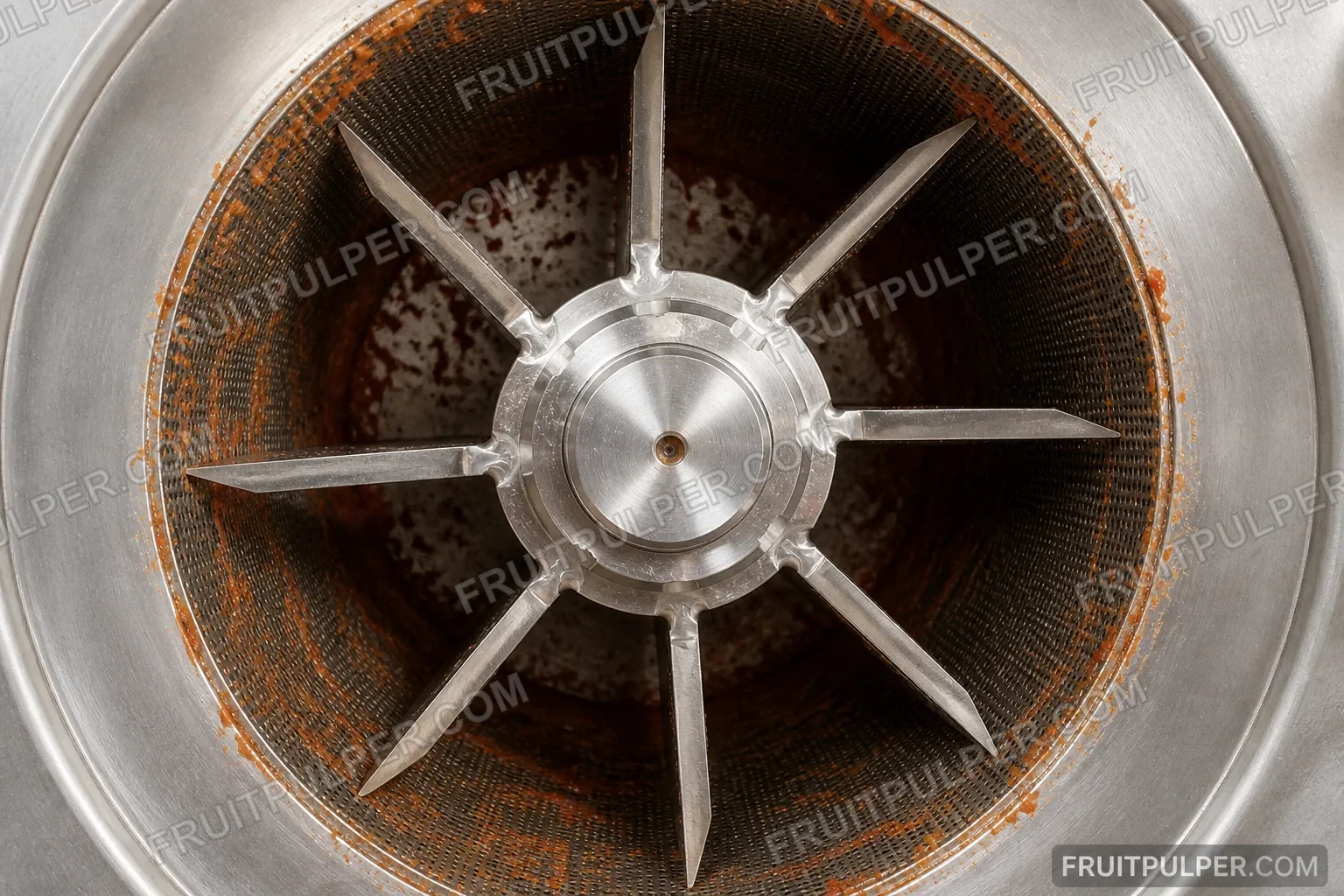
Feed distribution affects the whole chamber
Uneven feed can change screen loading, vibration and residence. Define whether product enters by gravity, screw, pump or another feeder, and how upstream flow is controlled.
The screen is not acting alone
Perforation size and open area matter, but so do rotor or paddle geometry, speed, clearance and product temperature. Screen comparisons should keep the other variables visible.
The reject outlet closes the mass balance
Discharge restriction can influence how much work is applied before solids leave. Record the adjustment and inspect reject dryness or retained useful material instead of treating reject as waste by default.
| Variable | Possible effect | Verification |
|---|---|---|
| Screen aperture/open area | Texture, fibre and capacity | Product profile plus screen loading |
| Rotor speed/geometry | Impact, shear and residence | Settings recorded during material trial |
| Paddle-screen clearance | Force against screen | Adjustment range and repeatability |
| Reject restriction | Pomace dryness and recovery | Reject sample and balanced weights |
Questions before a trial
Does centrifugal force alone make the separation?
Descriptions often mention centrifugal effects, but the practical result comes from the complete rotor, screen, clearance, feed and discharge arrangement.
Can the screen size predict particle size exactly?
No. Product structure can deform or shear, and the full mechanism influences the output. Verify with a defined texture method.
Why record reject dryness?
It helps show whether useful product remains in the solids stream and whether discharge settings changed the balance.
Technical references and scope
These sources explain general mechanisms and methods. Another supplier's model, rating or claimed results are not specifications for fruitpulper.com.
Equipment quotation
Tell us what the machine will process.
Send the fruit, prepared-feed rate and target pulp or puree. Include a drawing or trial record when available; you can enquire without a screen size.