Feed arrangement
Present a controlled material stream to the separation chamber without hiding the upstream preparation duty.
Fruitpulper.com / Equipment / DJ two-stage series
This two-chamber stainless machine places coarse pulping and a second refining duty in series. The published DJ family spans five reference sizes. Match a size to the prepared fruit, screen and finished pulp through a real product trial and a model-specific drawing.
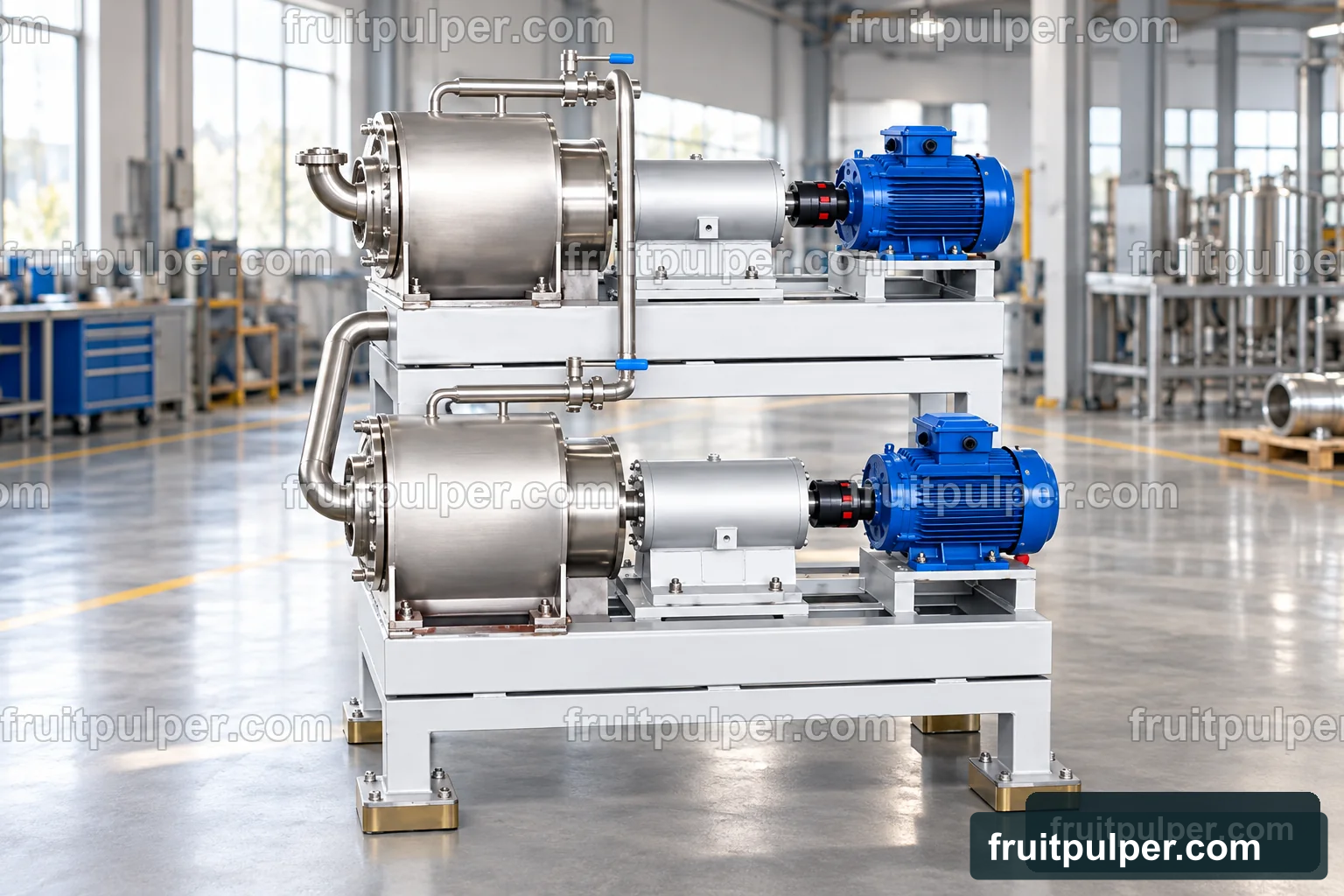
01 / DJ series · five catalogue sizes
The five DJ catalogue sizes are reference ratings for the equipment family, not guarantees for every fruit or screen. The catalogue does not define a per-model feed basis, weight or acceptance trial. Catalogue dimensions are not reproduced here; confirm the selected configuration against its supplied drawing. The pictured machine is a family example, not proof of an exact DJ model or customer installation.
Request this equipment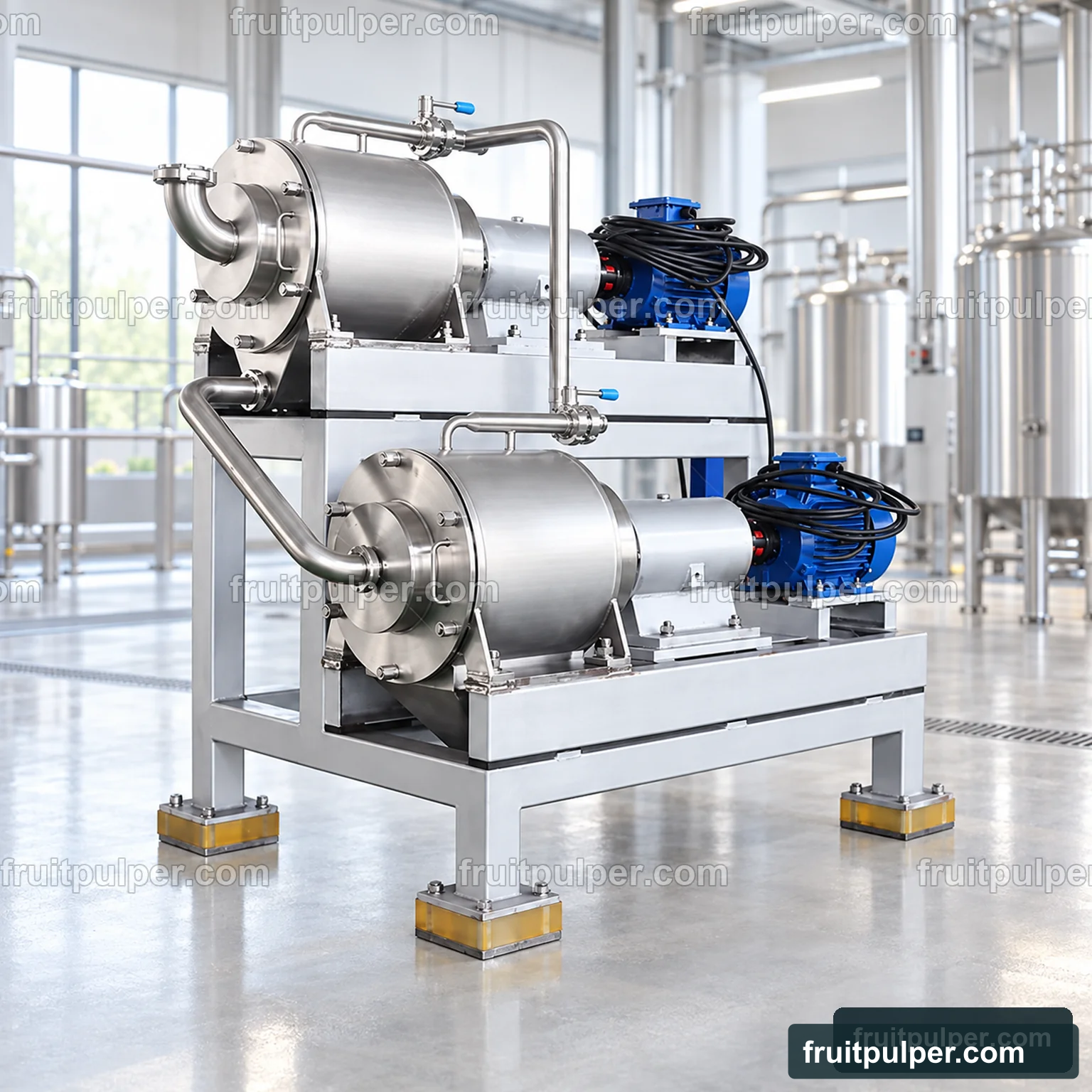
| DJ model | Catalogue capacity (t/h) | Catalogue motor power (kW) | DJ family screen range (mm) |
|---|---|---|---|
| DJ-3 | 1–3 | 4.0 × 2 | 0.4–1.5 |
| DJ-5 | 5 | 7.5 × 2 | 0.4–1.5 |
| DJ-10 | 10 | 18.5 × 2 | 0.4–1.5 |
| DJ-15 | 15 | 30 + 18.5 | 0.4–1.5 |
| DJ-25 | 25 | 45 + 37 | 0.4–1.5 |
These published catalogue values are reference ratings. Confirm the feed basis, screen, electrical supply and selected machine drawing before ordering; the image identifies the family, not an exact size.
Define fruit, temperature and upstream preparation.
Rotor action + screen surface
Functional illustration; not a machine drawingTest texture and defects against the product brief.
Inspect integrity and useful pulp remaining.
A coarse screen can remove larger peel, seed or fibre and reduce the solids burden reaching a finer screen. The target is a stable feed to stage two, not simply maximum force in stage one.
The finishing screen is evaluated against particle profile, visible defects and product loss in the reject. A smaller aperture alone does not guarantee a better product if it blinds, shears unwanted material or rejects useful pulp.
Two stages increase screens, seals, access points and changeover work. Quote net production hours after cleaning and inspection, and verify whether stages can be opened, removed and reassembled safely.
| Condition | Single stage may fit | Double stage may merit a trial |
|---|---|---|
| Feed solids | Prepared and relatively uniform | Mixed coarse solids overload the fine duty |
| Texture target | One screen meets the accepted profile | Coarse separation and fine finishing need different apertures |
| Product changes | Long campaigns on one fruit | Multiple recipes justify staged screen sets if changeover is manageable |
| Evidence | One balanced mass and quality check | Mass and quality checks around each stage |
No. It describes a process arrangement, not a performance multiplier. Measure product and reject around both stages.
Usually finishing follows coarse removal, but the correct sequence depends on the feed and target. Confirm by trial rather than a generic rule.
Possibly, but it should not be assumed. Record available speed, clearance and discharge controls for each stage.
These sources explain general mechanisms and methods. Another supplier's model, rating or claimed results are not specifications for fruitpulper.com.
Confirm inlet and outlet elevations, transfer pump or buffer interface, safe screen access and discharge handling on the selected drawing. During a witnessed material trial, collect product and rejects over the same interval and record product quality, retained useful pulp and any damaged hard bodies.
Review acceptance pointsPresent a controlled material stream to the separation chamber without hiding the upstream preparation duty.
Move material against the screen with a defined mechanical action while transporting retained solids towards discharge.
Provide the separation surface through which the desired product fraction passes.
Remove retained solids as a distinct measured stream without treating dryness alone as success.
Capture and transfer the through-screen stream while preserving an identifiable sampling boundary.
Support the defined rotor duty and planned maintenance access without using installed power as a stand-alone performance claim.
Equipment quotation
Send the fruit, prepared-feed rate and target pulp or puree. Include a drawing or trial record when available; you can enquire without a screen size.