Feed arrangement
Present a controlled material stream to the separation chamber without hiding the upstream preparation duty.
Fruitpulper.com / Equipment / dedicated stone handling
This photographed equipment family combines a stone-fruit feed hopper with a dedicated separation path and pulp collection. It differs mechanically from a standard DJ pulper. Confirm fruit size, stone adhesion and maturity before treating any fruit as an accepted inlet.
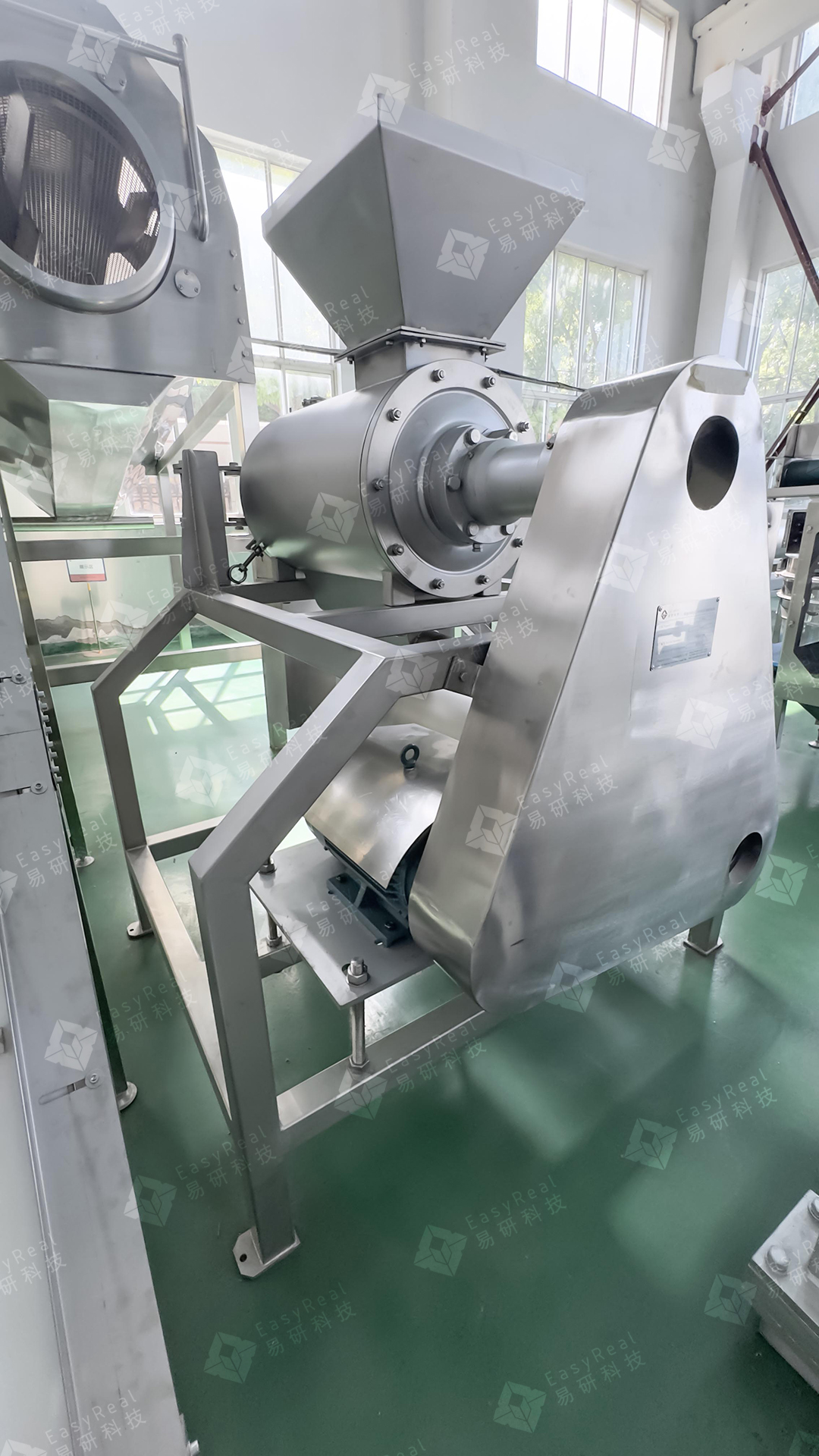
02 / Dedicated stone handling
This is a dedicated machine family, not a DJ pulper with a different name. Its pictured structure does not establish a universal fruit-size envelope, an exact model number or a guaranteed stone-removal rate.
Request this equipmentDefine fruit, temperature and upstream preparation.
Rotor action + screen surface
Functional illustration; not a machine drawingTest texture and defects against the product brief.
Inspect integrity and useful pulp remaining.
Record fruit size range, stone dimensions, maturity, flesh adhesion and whether fruit is halved, softened or whole. These facts determine whether a separate destoner, manual preparation or a combined machine can be evaluated safely.
The trial should check broken stone fragments, kernel exposure, peel carryover and useful flesh remaining on the reject. A clean-looking puree does not prove the machine handled stones without damage or loss.
Destoning and fine refining may need different geometries or stages. If one machine is proposed for both, ask for the sequence, screen access and acceptance criteria for each duty.
Confirm inlet and outlet elevations, transfer pump or buffer interface, safe screen access and discharge handling on the selected drawing. During a witnessed material trial, collect product and rejects over the same interval and record product quality, retained useful pulp and any damaged hard bodies.
Review acceptance pointsPresent a controlled material stream to the separation chamber without hiding the upstream preparation duty.
Move material against the screen with a defined mechanical action while transporting retained solids towards discharge.
Provide the separation surface through which the desired product fraction passes.
Remove retained solids as a distinct measured stream without treating dryness alone as success.
Capture and transfer the through-screen stream while preserving an identifiable sampling boundary.
Support the defined rotor duty and planned maintenance access without using installed power as a stand-alone performance claim.
Equipment quotation
Send the fruit, prepared-feed rate and target pulp or puree. Include a drawing or trial record when available; you can enquire without a screen size.